The rising transportation costs have pushed individuals to seek affordable alternatives to traditional vehicles. Bikes and electric scooters represent sustainable, efficient options for urban mobility, but their upfront costs can still be prohibitive for many potential riders. Fortunately, innovative financing solutions are transforming how consumers access these transportation options. Ride Now, Pay Later (RNPL) programs are emerging as game-changing approaches that make bikes and e-scooters affordable while spreading payments over time.
This blog post deeply analyzes how Ride Now Pay Later (RNPL) payment solutions work, their benefits, the future, and potential drawbacks.
Let’s get started.
What is Ride Now Pay Later Financing
Ride Now, Pay Later represents a specialized point-of-sale financing for mobility products. These programs allow consumers to take immediate possession of bikes or e-scooters while paying installments.
How Ride Now Pay Later Works
- Instant approval processes typically take minutes rather than days
- Zero or low interest rates during promotional periods
- Fixed payment schedules ranging from a few months to several years
- Minimal or no down payment requirements
- Digital application processes through mobile apps or websites
Ride now pay later mirrors buy now pay later services that have become popular in retail, but with customized terms for transportation needs.
What are the Key Competitors in the Ride Now Pay Later Market
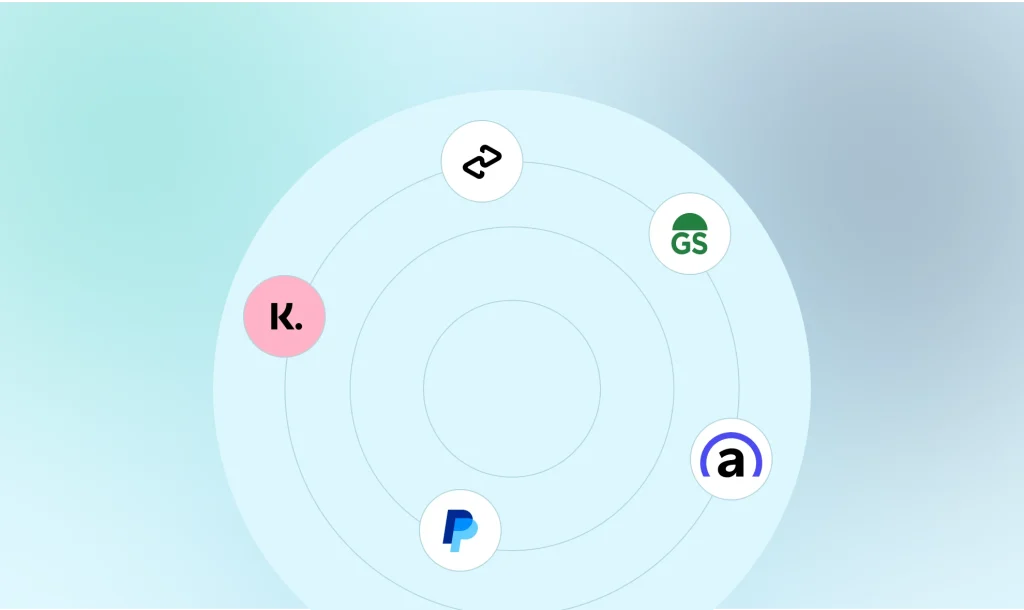
Several financial service providers have developed specialized programs for mobility products:
- Affirm partners with bike retailers to offer 0% APR financing options
- Klarna provides installment payment plans for e-scooters with no interest on shorter terms
- PayPal Credit offers no-interest periods for purchases over specific amounts
- Afterpay supports smaller purchases with four equal installment payments
- GreenSky specializes in higher-value transportation financing
Many e-bike manufacturers and retailers now offer their branded RNPL financing solutions directly to consumers.
Benefits of Ride Now Pay Later for Bikes and E-Scooters
The advantages of these financing options extend beyond simple affordability, creating multiple benefits for consumers.
Financial Accessibility
Immediate access to transportation represents the primary benefit of RNPL programs. Rather than saving for months to afford quality transportation, consumers can acquire what they need when needed.
For example, a $1,200 e-bike might cost just $100 per month over 12 months, making it immediately accessible to someone who cannot afford the whole amount upfront but can manage the monthly payment.
Quality Upgrades
RNPL allows consumers to purchase higher-quality products with better specifications, safety features, and durability. This means:
- Accessing bikes with superior braking systems
- Obtaining e-scooters with extended battery ranges
- Selecting models with enhanced safety features
- Choosing products with more extended warranties and support
The ability to spread payments makes premium models with longer lifespans more accessible, potentially offering better long-term value despite higher initial costs.
Environmental Impact
Increasing access to micro-mobility options supports environmental sustainability by:
- Reducing carbon emissions compared to car usage
- Decreasing traffic congestion in urban areas
- Minimizing parking space requirements
- Supporting the transition to electric transportation
By making green transportation options more accessible, RNPL programs indirectly contribute to environmental conservation efforts.
Cost Comparison with Other Transportation Options
When evaluated against other transportation methods, financed bikes and e-scooters often remain economically advantageous:
- Public transportation: Monthly transit passes in major cities cost $70-$120, comparable to many RNPL payments but without the eventual ownership benefit
- Ride-sharing services: Regular users spend $200-$400 monthly, substantially more than typical RNPL payments
- Car ownership: Average costs including payments, insurance, fuel, and maintenance exceed $600 monthly
- Rental programs: Daily or monthly rental fees for bikes or scooters often surpass ownership costs over time
Even with financing costs included, personal ownership through RNPL frequently represents the most cost-effective long-term solution.
Popular RNPL Options for Different Budgets
Financing solutions exist across various price points, accommodating different financial situations.
Entry-Level Options for Ride Now Pay Later ($300-$800)
For basic commuter bikes and starter e-scooters:
- Afterpay: Four equal payments spread over six weeks with zero interest
- Sezzle: Four interest-free payments over six weeks
- Zip: Four payments over six weeks with minimal fees
- Shop Pay Installments: Four equal, interest-free payments
These options work well for lower-priced products but offer shorter payment windows.
Mid-Range Solutions for Ride Now Pay Later ($800-$2,000)
For quality commuter e-bikes and advanced scooters:
- Affirm: 3-36 month terms with interest rates from 0-30% APR based on credit
- Klarna: 6-36 month financing with competitive rates
- PayPal Credit: 6-month no-interest promotion for qualifying purchases
- Splitit: Divides payment across existing credit cards without additional credit checks
These provide longer payment terms suitable for more substantial purchases.
Premium Financing for Ride Now Pay Later ($2,000+)
For high-end electric bikes and premium transportation:
- GreenSky: Terms up to 84 months for significant purchases
- Manufacturer financing: Many premium brands offer their extended payment plans
- Synchrony: Specialized transportation credit cards with promotional periods
- Wells Fargo: Personal loans specifically for transportation needs
These options typically require stronger credit profiles but offer the most favorable terms for expensive equipment.
How to Apply for Ride Now Pay Later Financing
The application process typically follows a streamlined approach designed for quick approvals.
Step-by-Step Application Process
- Select your preferred bike or e-scooter from a retailer offering RNPL options
- Choose your financing option at WooCommerce checkout (online or in-store)
- Complete the brief application with basic personal and financial information
- Receive an instant decision in most cases
- Review and accept terms including payment schedule and interest rates
- Complete the purchase and take immediate possession of your transportation
Many retailers integrate multiple financing options directly into their checkout process, allowing for easy comparison between different providers.
Required Documentation
Most RNPL providers require minimal documentation:
- Government-issued identification
- Basic personal information (name, address, date of birth)
- Income verification (sometimes, though not always needed)
- Banking information for setting up automatic payments
- Contact details including phone number and email address
The streamlined verification process prioritizes speed and accessibility.
Credit Score Considerations
Different financing options accommodate varying credit profiles:
- Soft credit checks are common and don’t impact credit scores
- Limited credit history can still qualify for many entry-level options
- Alternative approval methods sometimes evaluate banking history rather than credit scores
- Lower credit scores may result in higher interest rates rather than outright rejections
- First-time credit users can often qualify for starter financing options
Many providers offer pre-qualification tools that allow consumers to check eligibility without impacting credit scores.
Comparison Between RNPL and Traditional Financing Methods

Understanding how RNPL compares with conventional financing helps consumers make informed decisions.
Ride Now Pay Later vs. Credit Cards
Buy now pay later vs credit cards is an interesting contrast with various key differences that are identified below:
- Approval process: RNPL often offers easier approval than credit cards
- Payment structure: RNPL provides fixed terms versus revolving credit
- Interest rates: Many RNPL options offer promotional zero-interest periods
- Purpose limitation: RNPL funds can only be used for specific purchases
- Transparency: RNPL typically shows total costs upfront rather than depending on variable rates
RNPL often provides more predictable payment structures for disciplined consumers than credit cards.
Ride Now Pay Later vs. Personal Loans
Compared to traditional loans:
- Application simplicity: RNPL requires less documentation than most personal loans
- Approval speed: RNPL decisions typically come in minutes versus days for loans
- Funding limitations: RNPL is tied to specific purchases while loans provide cash
- Term flexibility: Personal loans sometimes offer more extended repayment periods
- Relationship requirements: Loans often require existing banking relationships
RNPL generally provides faster, more convenient financing specifically for transportation purchases. This financing is a fix now pay later mantra.
Ride Now Pay Later vs. Retailer Financing
Retailer-specific financing differs from third-party RNPL in several ways:
- Store limitations: Retailer financing works only at specific WooCommerce stores
- Approval criteria: Store credit often has different qualification standards
- Hidden fees: Some store financing includes deferred interest penalties
- Credit reporting: Not all retailer financing builds credit history
- Promotional offers: Retailers sometimes offer exclusive financing promotions
Third-party RNPL options typically provide more flexibility across multiple retailers.
Research-Based Insights on Ride Now Pay Later Usage
Recent studies offer valuable context for understanding the RNPL phenomenon.
Economic Impact Studies on Ride Now Pay Later
Just like buy now pay later, economic analysis reveals broader implications:
- The RNPL market for transportation has grown 215% since 2020
- Average transaction values for mobility products purchased via RNPL increased 34% year-over-year
- E-bike sales specifically showed a 47% increase when RNPL options became available
- Small businesses report 23% higher conversion rates when offering financing options
- Consumer transportation spending shows 17% higher lifetime value with financing availability
These findings demonstrate RNPL’s significant impact on transportation accessibility.
Credit Impact Research
Studies regarding credit implications show mixed results:
- 68% of consumers report no negative credit impacts from RNPL usage
- 14% experienced credit score improvements through responsible RNPL repayment
- 18% reported adverse credit effects, primarily from missed payments
- 42% of users were unaware whether their RNPL activity was reported to credit bureaus
- First-time credit users showed 22% higher approval rates for subsequent credit products
Responsible usage provides neutral or positive credit outcomes for most consumers.
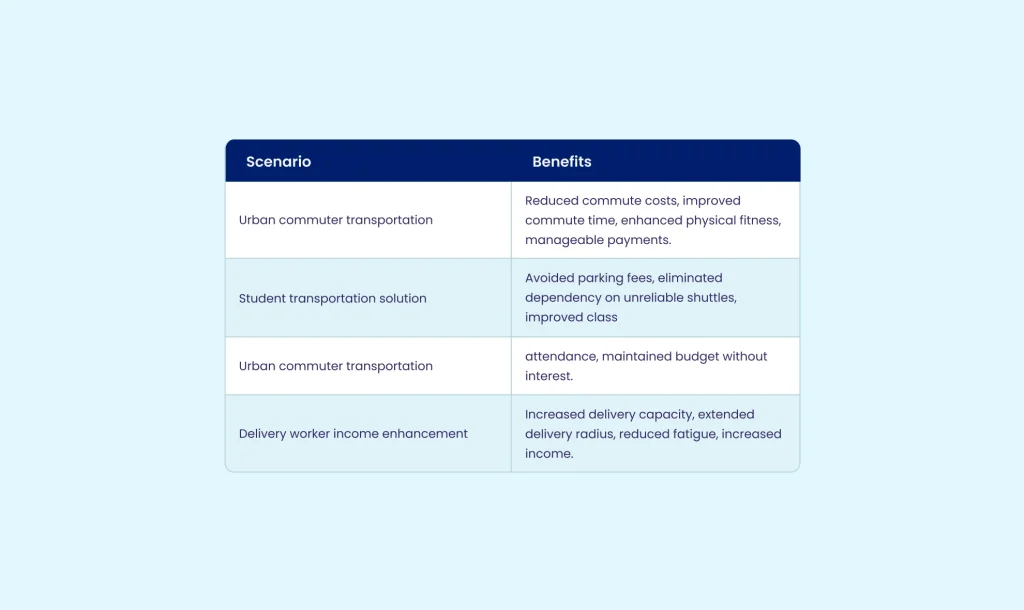
What are The Benefits of Ride Now Pay Later
Here is a summary of the types of benefits that are relevant to “Ride Now, Pay Later” based on similar Buy Now Pay Later applications:
RNPL for Commercial and Fleet Applications
Beyond individual consumers, businesses also benefit from RNPL solutions.
Small Business Delivery Fleets
For local businesses developing delivery capabilities:
- Staggered acquisition of multiple vehicles without major capital expenditure
- Cash flow preservation through predictable monthly payments
- Fleet standardization with consistent vehicle specifications
- Tax advantages from operational expenses rather than capital investments
- Scalability through incremental additions without financing disruption
RNPL enables service expansion without significant upfront investment.
Rental Operations Startup Financing
For entrepreneurs entering the rental market:
- Inventory acquisition with minimal initial capital
- Revenue-matching payment structures aligned with business income
- Mixed fleet financing across different product categories
- Maintenance inclusion options that provide operational predictability
- Fleet refreshment programs that facilitate regular updating
These financing structures significantly reduce barriers to market entry.
Corporate Mobility Programs
For companies providing employee transportation options:
- Employee benefit programs offering subsidized transportation
- Health initiative support through active transportation options
- Parking reduction strategies leveraging micro-mobility solutions
- Sustainability objective support with measurable emissions reduction
- Cost-effective alternatives to company vehicle programs
Corporate RNPL programs frequently offer enhanced terms beyond consumer options.

Emerging trends suggest continued evolution in transportation financing.
Integration with Sharing Economy
Next-generation platforms are beginning to blend ownership and sharing:
- Peer-to-peer lending of financed vehicles during non-use periods
- Partial ownership models with shared payment obligations
- Income-generating assets that offset financing costs
- Community fleet programs with distributed ownership structures
- Usage-based payment adjustments that align costs with actual usage
These innovations create hybrid models between traditional ownership and rental services.
Subscription-Based Modifications
Subscription elements are increasingly incorporated into financing:
- Maintenance inclusion packages that cover regular service
- Insurance bundling with monthly financing payments
- Upgrade paths allowing for vehicle exchanges during the term
- Usage tracking that adjusts payments based on actual utilization
- Multi-vehicle access within single payment structures
These approaches provide more comprehensive transportation solutions beyond simple financing.
Technological Integration
Emerging technologies enhance financing offerings:
- IoT connectivity for usage-based financing adjustments
- Blockchain payment verification for peer-to-peer arrangements
- AI-powered approval systems with enhanced accessibility
- Digital identity verification streamlining application processes
- Biometric payment authorization improving security
Technology continues to reduce friction in both application and management of financing programs.
How Payment Plans are a Game Changer For Affordable E-Scooters and E-Bikes
Incorporating flexible payment options can significantly improve consumers’ affordability of e-scooters and e-bikes. The Payment Plans for WooCommerce plugin offers a perfect WooCommerce solution for businesses looking to implement such affordable options.
Here’s how this WooCommerce plugin can benefit companies in the context of buy now pay later:
1. Flexible Payment Structures

The plugin enables businesses to offer various payment plans, such as installments or deposits, making high-ticket items like e-scooters and e-bikes more accessible to a broader audience.
2. Automatic Recurring Billing

With features like automatic billing and rebilling for failed payments, companies can ensure a steady cash flow without manual intervention, reducing administrative burdens.
3. Cost-Effective Integration

Unlike third-party services that may charge higher fees, the Payment Plans for WooCommerce plugin requires only an annual fee and standard payment processing charges, offering a care now pay later solution for businesses.
4. Enhanced Customer Experience
By supporting multiple payment gateways and other WooCommerce add-ons, the plugin provides a seamless and flexible payment experience, potentially increasing customer satisfaction and loyalty.
Using Payment Plans for WooCommerce helps e-scooter and e-bike companies aiming to make their products more affordable, expand their customer base, and boost sales.
Wrap Up
Ride Now Pay Later options are fundamentally transforming transportation accessibility. It makes e-bikes and e-scooters available to broader consumer segments by eliminating upfront cost barriers. For those considering a bike or e-scooter purchase, RNPL options offer a practical pathway to immediate transportation access while maintaining budgetary control. As sustainable transportation becomes increasingly important in urban environments, the future of transportation financing appears increasingly flexible, accessible, and aligned with consumer needs and environmental imperatives.